The Room Three
Fireproof GamesPuzzle
4.912.18K Reviews
- Version
- 1.09
- Installs
- 1.00M
- Age Rating
- Everyone
Screenshots
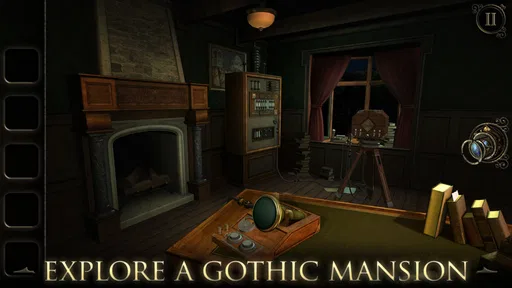
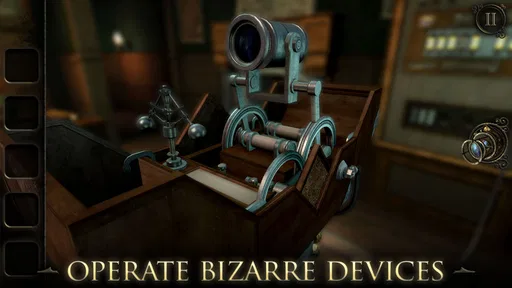
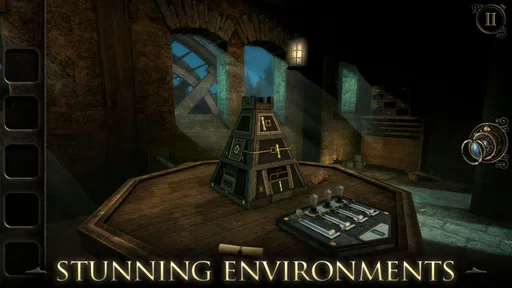
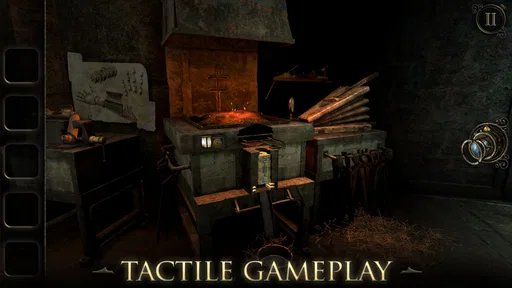
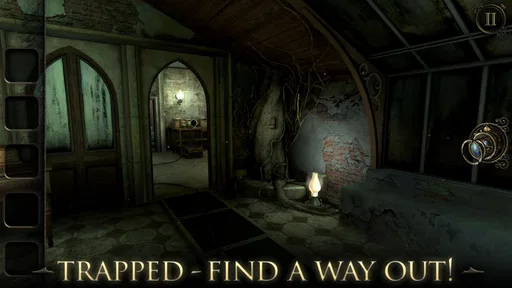
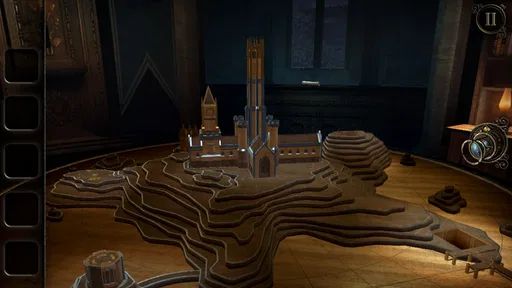
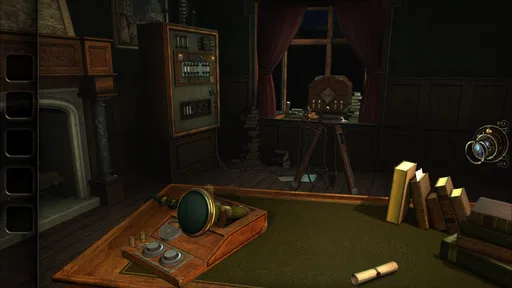
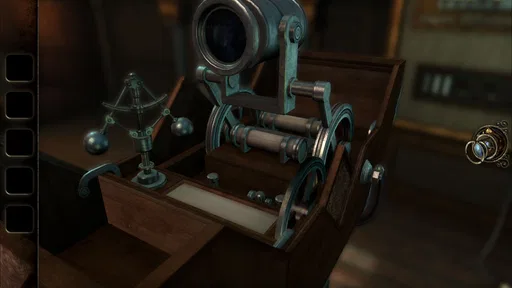
Our Review of The Room Three
 Analysis by Appyee
What makes The Room Three stand out for me is the way it turns close observation into the main puzzle-solving tool. I’m not racing through a board of clues or matching symbols against a timer. I’m examining objects, testing what moves, and working out how separate details fit together. That slower, hands-on approach gives each discovery a satisfying sense of cause and effect.
Why examining objects matters
This is a puzzle game from Fireproof Games, and its central pleasure is interacting with carefully constructed objects rather than simply choosing answers from a menu. A small detail can change how I understand a mechanism: a mark may suggest an alignment, a movable piece may expose a concealed area, or an object that seemed decorative may turn out to be part of a larger problem. The game rewards patient looking, not random tapping.
That distinction affects the whole experience. In many mobile puzzle games, the challenge is to spot a pattern quickly or repeat a familiar logic rule. Here, I have to build a mental picture of the object in front of me, notice how its parts relate, and remember clues that may become useful elsewhere. It feels closer to handling a miniature puzzle box than completing a conventional set of brain teasers.
How I approach a stubborn mechanism
When I get stuck, I try to make each interaction a deliberate test. I rotate or inspect the object, look for parts that appear movable, and try one change at a time. If something shifts, I check what that reveals before moving on. This is more useful than tapping everything repeatedly, because a small change in position can provide a clue that is easy to miss when I’m clicking in a hurry.
I also keep track of unresolved details in my head instead of assuming every clue must be used immediately. A symbol, shape, or newly opened section may make more sense after I’ve explored another part of the environment. The connected puzzles encourage that kind of back-and-forth thinking: progress is not always a straight line from one solved object to the next. Taking a short break can help, too. When I return, I often notice a feature I had been staring past.
The tactile controls are a big part of why this method works. Swiping, pinching, and tapping make inspection feel direct, while the atmosphere and sound give quiet moments of searching some weight. I would play somewhere I can focus and hear the game comfortably; treating it as something to skim while distracted makes it harder to appreciate both the clues and the mood.
A good fit for an unhurried evening
My ideal time for it is a quiet stretch at home, perhaps when I have enough room in my evening to solve one mechanism and follow the next clue without checking the clock. It also suits a short session when I want a focused mental break, provided I’m comfortable pausing in the middle of a mystery and picking it up later. I wouldn’t choose it for a commute where I’m constantly interrupted or for a few spare seconds in a queue: the satisfaction comes from sustained attention.
Compared with quick match-style puzzles, this asks for more observation and gives less of an instant burst of progress. Compared with open-ended escape-room games, its detailed objects and linked discoveries provide a more guided route through the mystery. That structure is helpful if I like knowing that careful inspection can move me forward, but it may feel restrictive if I want a large world to roam freely or a puzzle sandbox with no narrative direction.
What the price and format mean in practice
The game costs $3.99, so I’d think of it as a paid puzzle experience rather than a free app to dip into without commitment. Its 4.9 average from around 113,000 ratings, alongside over a million installs, suggests that many players have found this style appealing, though popularity alone can’t tell you whether its pace suits you. It is rated Everyone, and version 1.09 runs on Android 6.0 or later.
If you enjoy being methodical, the price is easier to justify: the appeal is in the time spent examining mechanisms and connecting clues, not in a daily routine or competitive score. If you only want a quick puzzle that can be finished in a minute, I’d save your money for something built around short rounds. I’d also skip it if fiddly object inspection frustrates you; here, careful manipulation is the point, not a side activity.
Immersive Atmosphere
Right off the bat, the atmosphere in The Room Three draws you in. The graphics are, in a word, stunning. The developers have really outdone themselves with intricate details that make every level feel like a work of art. I found myself lost in the hauntingly beautiful environments, trying to uncover secrets hidden in every corner.
One neat feature is the tactile experience. Swiping, pinching, and tapping your way through puzzles feels incredibly satisfying. It’s as if the game designers wanted us to feel every turn of a key or slide of a panel. The sound design complements this perfectly, adding an eerie, immersive layer to the game.
Puzzle Design
The puzzles in The Room Three are brilliantly crafted. They’re challenging enough to keep you engaged, but not so difficult that you want to throw your phone out the window. The game introduces new mechanics gradually, ensuring you’re never overwhelmed. I particularly enjoyed the multi-layered puzzles where solving one part leads to new challenges. It’s like peeling an onion, each layer leading to a new surprise.
What's cool is the interconnectedness of the puzzles. You solve one and it opens up new areas, revealing more mysteries to solve. It’s a clever way to keep you hooked, always wondering what the next room will hold.
Storytelling Through Exploration
Unlike many puzzle games, The Room Three weaves a mysterious narrative that unfolds as you progress. You’re not just solving puzzles for the sake of it; you’re piecing together a story. Little notes, cryptic messages, and hidden clues add layers to the narrative, making you feel like a detective unraveling a grand mystery.
The storyline kept me intrigued, pushing me to explore every nook and cranny of the game. It’s like reading a thrilling novel where you get to play the protagonist. The narrative elements are subtle yet impactful, keeping the game engaging from start to finish.
Replay Value
One thing I love about The Room Three is its replayability. There are multiple endings, which means you can dive back into the game and experience different outcomes. I found myself going back to see what I missed the first time around, discovering new elements and paths I hadn’t noticed before.
For those who love a good brain teaser, this game offers plenty of replay value. It’s not just about completing it once; it’s about exploring all the possibilities the game has to offer.
Who will get the most from it
I’d recommend it most to players who like solving physical, layered puzzles at their own pace and enjoy a story that emerges through exploration rather than constant explanation. It can also work well as a shared activity: one person can inspect an object while another keeps track of clues, as long as both are happy to discuss possibilities instead of grabbing the phone and rushing ahead.
It is less suited to anyone who wants frequent action, a score chase, or a puzzle game that explains every step clearly. Its atmosphere is deliberately mysterious, and there are moments when I had to stop and reconsider what I was overlooking. That friction is part of the appeal for me, but it is not automatically enjoyable for every player. I’d choose a lighter, faster puzzle if I wanted a simple distraction rather than a sustained investigation.
Small habits that make sessions smoother
I get more from a session when I pause after a mechanism changes and take in the whole scene again. It is tempting to focus only on the part I just touched, but a new opening or altered detail elsewhere can be the useful result. I also avoid making several guesses in quick succession. Changing one thing at a time helps me understand why a puzzle responds and makes the eventual solution feel earned.
For a casual evening, I would set the phone down between sections rather than trying to force progress when my attention is fading. The game’s layered construction makes it easy to lose track of small details when tired. A brief pause is often better than turning exploration into a repetitive tapping session, and returning with fresh eyes keeps the mystery enjoyable instead of turning it into a chore.
How it fits among puzzle games
The Room Three occupies a particular middle ground: it has the tactile focus of an object-based escape puzzle, but its connected discoveries and narrative give the experience more direction than a collection of isolated riddles. That makes it a strong choice when I want a crafted journey instead of endless levels or a daily puzzle habit. The trade-off is that its appeal depends on liking this specific kind of close inspection; it is not a substitute for word puzzles, number challenges, or quick arcade-style brain games.
Its release date is January 11, 2016, and the current version is 1.09. Those details place it among established mobile puzzle experiences, but what matters more in use is that the central interaction still feels easy to understand: examine, test, notice, and connect. I would not buy it expecting a stream of unrelated new challenges; I’d choose it for a deliberate, atmospheric mystery that rewards attention.
Final Thoughts
In the end, The Room Three is a masterclass in puzzle design and storytelling. It’s a game that challenges your mind while immersing you in a beautifully crafted world. If you haven’t played it yet, I highly recommend giving it a try. It’s one of those rare gems that keeps you thinking long after you’ve put it down. So go ahead, dive into the mystery and see where it takes you!
Verdict
Strengths of The Room Three
- Engaging puzzles with excellent design.
- Atmospheric graphics enhance immersion.
- Intuitive touch controls.
- Expansive game world with detailed environments.
- Multiple endings for replay value.
Limitations of The Room Three
- Some puzzles may feel repetitive.
- Requires a lot of storage space.
- Limited hints can be frustrating.
- No cloud save support.
- Occasional performance lags on older devices.
Other Releases by Fireproof Games
View All


Similar Picks in This Category
View All
Block Blast!
HungryStudio4.8

Braindom: Brain Games Test
Lahana Game Studio4.6

AMAZE!
CrazyLabs LTD4.6

Sudoku - Classic Sudoku Puzzle
Oakever Games4.7

Art Puzzle - Puzzle Games
Easybrain4.8

Amaze GO!
Oakever Games4.9
Frequently Asked Questions
What is the main objective of The Room Three?
The Room Three is a puzzle adventure game where players must solve intricate puzzles and explore beautifully designed environments. The main objective is to escape a mysterious island by uncovering secrets and solving challenging puzzles. Each room presents unique challenges that require keen observation and logical thinking.
Is The Room Three suitable for all ages?
The Room Three is generally suitable for teenagers and adults due to its complex puzzles and atmospheric themes. While there is no explicit content, the game’s eerie ambiance and challenging nature may not be ideal for younger children. It’s best for those who enjoy cerebral challenges and immersive storytelling.
Do I need to play the previous games to enjoy The Room Three?
While The Room Three is part of a series, you do not need to have played the previous games to enjoy it. However, playing earlier installments can enhance your understanding of the storyline and provide additional context. Each game is a standalone experience but shares thematic and narrative elements.
What devices are compatible with The Room Three?
The Room Three is available on both Android and iOS platforms. It requires a device with up-to-date software and sufficient processing power to handle its detailed graphics and interactive elements. Check the app store for specific device compatibility and system requirements before downloading.
How long does it take to complete The Room Three?
The completion time for The Room Three can vary based on individual puzzle-solving skills. On average, players might spend around 4 to 8 hours to finish the game. However, taking time to explore and immerse oneself in the environment can extend the gameplay experience considerably.
Play our best games!


